
In recent years, research has focused on improving the efficiency of wind turbines. One trend is to increase the size of wind turbines, both in height and blade length, to capture more wind and produce more electricity. Larger rotor diameters allow wind turbines to sweep more area and capture more wind, increasing the number of areas available for wind development. Another trend is to increase the capacity of wind turbines, which means fewer turbines are needed to generate the same amount of energy across a wind plant. Overall, the trend is to improve the efficiency of wind turbines by increasing their size and capacity, reducing the number of turbines needed to generate the same amount of energy, and developing new solutions to increase their performance.
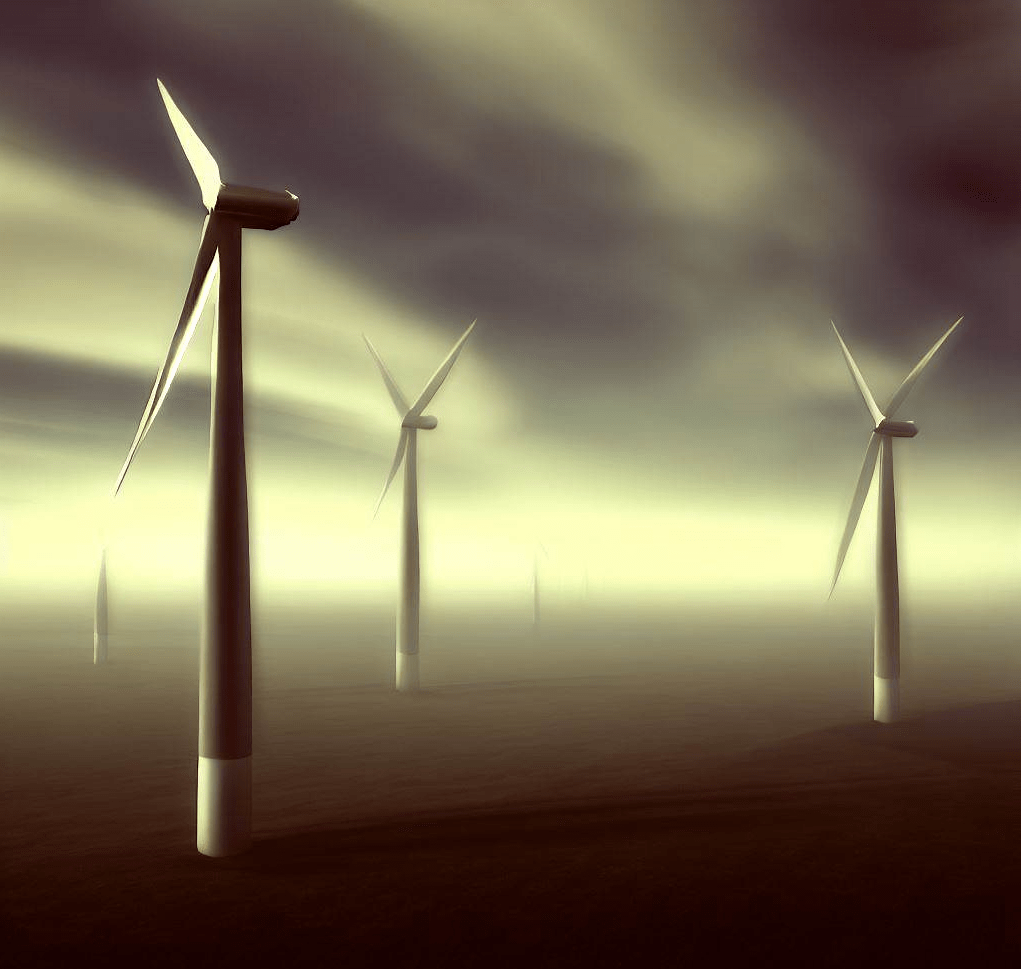
Today’s new wind power projects have a turbine capacity in the 3-4 MW range onshore and 8-12 MW offshore, and taller than 100 m. (1) The average capacity of newly installed U.S. wind turbines in 2021 was 3.0 megawatts (MW).(2) Wind power installed in Europe and US has reached 255 GW and 136 GW, respectively. (3,4)
In the growing industrial installation, various innovative wind turbine has been demonstrated, waiting for the commercialization. A typical wind turbine structure consists of skins, ribs, spars, and roots or hubs that connect between the blade and the wind turbine tower. (5) Airfoils, the cross-sectional shape of wind turbine blades, are the foundation of turbine blade designs. Generating lift and drag when they move through the air, airfoils play a key role in improving the aerodynamic performance and structural durability of a turbine’s blades. The research led to the development of seven airfoil families that addressed aerodynamic and structural requirements, significantly improving wind turbine efficiency and reducing the impact of soiling.(6)
Different from the traditional turbine structure, vertical axis wind turbines (VAWTs) have their rotor shafts oriented vertically, as opposed to horizontally like traditional wind turbines. (7) VAWTs have the advantage of being able to accept wind from any direction, which eliminates the need for wind-sensing and orientation mechanisms. However, VAWTs are typically less efficient than horizontal axis wind turbines (HAWTs) and require a lower wind speed to start generating power.
There is another category of the wind turbine, called bladeless wind turbines. They address the shortcomings of blade wind turbines, such as size, radar interference, noise pollution, and bird mortality. Bladeless turbines use aerodynamic induction to generate electricity, capturing wind energy through magnets and an electric generator. (8) The design often resembles a pole or a hollow tube, sometimes with an aerodynamic shape to enhance wind capture. Bladeless turbines utilize the phenomenon of oscillation or the creation of a vortex to generate power. When wind passes through or around the turbine, it causes the structure to oscillate or vibrate. The oscillation or vibrations are harnessed to convert wind energy into electrical energy.
(1) https://www.irena.org/Energy-Transition/Technology/Wind-energy
(2) https://www.energy.gov/eere/articles/wind-turbines-bigger-better
(3) https://en.wikipedia.org/wiki/Wind_power_in_Europe
(4) https://cleanpower.org/facts/wind-power/
(5) Mohamed Abdou Mahran Kasem, “Aerodynamic, Structural and Aeroelastic Design of Wind Turbine Blades”, DOI: 10.5772/intechopen.89761
(6) https://www.energy.gov/eere/wind/articles/case-study-airfoils-where-turbine-meets-wind
(7) https://www.alternative-energy-tutorials.com/wind-energy/vertical-axis-wind-turbine-design.html
(8) https://greenerideal.com/guides/renewable-energy/bladeless-wind-turbines-the-future-of-wind-energy/
 RenewTech Chronicles
Leave a comment