
Active research on the advancement of wind turbine control systems involves the development of intelligent control algorithms and machine learning techniques to optimize turbine performance based on real-time data.
Researchers are designing, implementing, and testing advanced wind turbine controls to maximize energy extraction and reduce structural dynamic loads. This involves developing control methodologies for both land-based and offshore wind turbines. Advanced control algorithms based on linear models of the turbine are being simulated and field tested. Researchers are also studying blade pitch and generator torque to optimize power capture and reduce wind turbine loads. By adjusting the blade pitch and generator torque based on real-time data, the turbine can operate more efficiently and withstand varying wind conditions. (1)
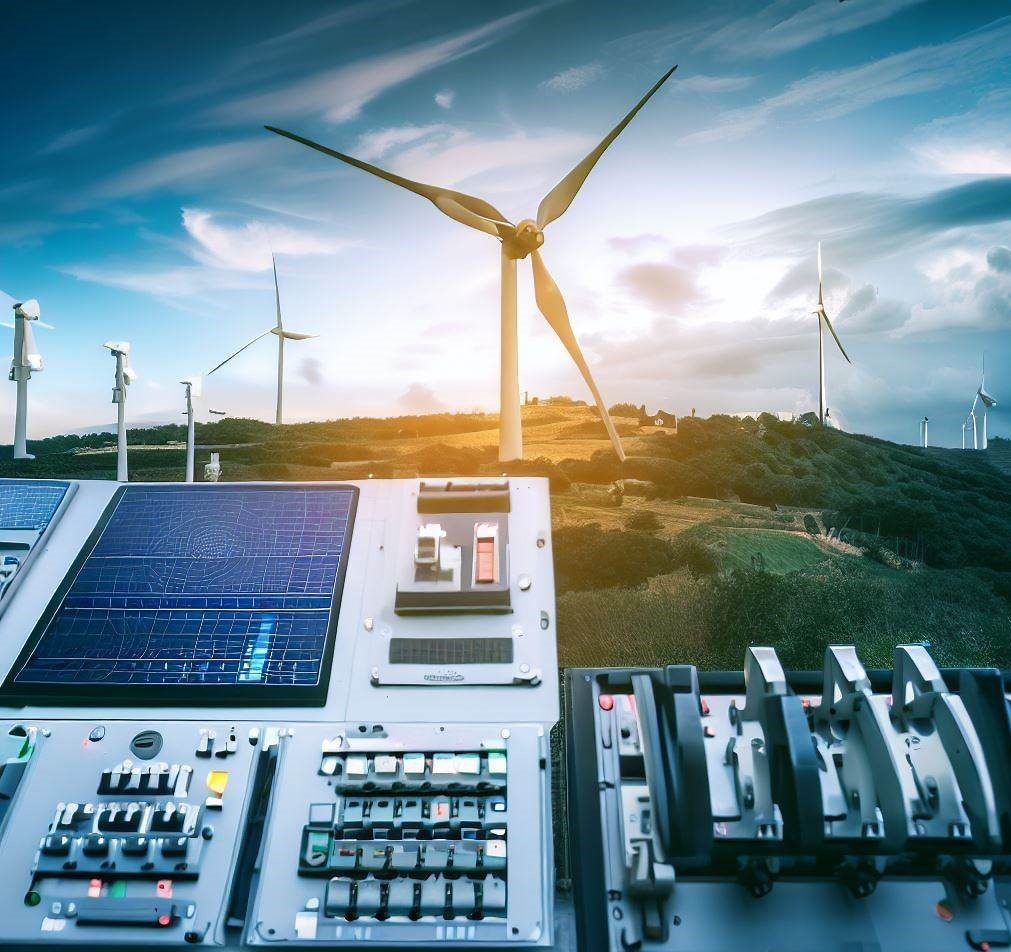
Control and monitoring systems play a crucial role in wind turbine performance. Researchers are exploring the use of advanced sensors, such as lidars, to measure wind speed and other parameters for tasks like maximum power point tracking (MPPT). Lidar-based control of wind turbines is being studied to improve feasibility and effectiveness. (2) A lidar-based model predictive wind turbine control was designed and assessed in a simulation study on a 5 MW nonlinear wind turbine model under different wind conditions. The study demonstrated that the developed lidar-based control algorithm can improve turbine performance. (3)
Machine learning techniques are being applied to wind turbine control systems to optimize performance based on real-time data. By analyzing large amounts of data, machine learning algorithms can identify patterns and make predictions to improve turbine operation and energy production. Researchers have proposed a machine learning-based prediction method to accurately estimate the fatigue loads and power of wind turbines under yaw control. This approach uses machine learning algorithms to predict turbine performance based on real-time data, which can help optimize turbine operation and reduce loads on turbine components. (4) Researchers have used deep machine learning algorithms to predict short-term wind power generation from wind speed data. This approach can help improve wind power forecasting accuracy, which is important for grid integration and energy management. (5)
(1) https://www.nrel.gov/wind/controls-analysis.html
(2) Wind Energy, 25, 1238-1251. https://doi.org/10.1002/we.2724
(3) Energies 2022, 15, 6429. https://doi.org/10.3390/en15176429
(4) Applied Energy, 326, 2022, 120013. https://doi.org/10.1016/j.apenergy.2022.120013
(5) Materials Today: Proceedings 47, 2021, 115-126. https://doi.org/10.1016/j.matpr.2021.03.728
 RenewTech Chronicles
Leave a comment